
Passenger on same plane as woman who died from hantavirus believed to be infected

Topics: Cruise Ship, Health, Travel, World News, UK News
 Madison Burgess
Topics: Cruise Ship, Health, Travel, World News, UK News
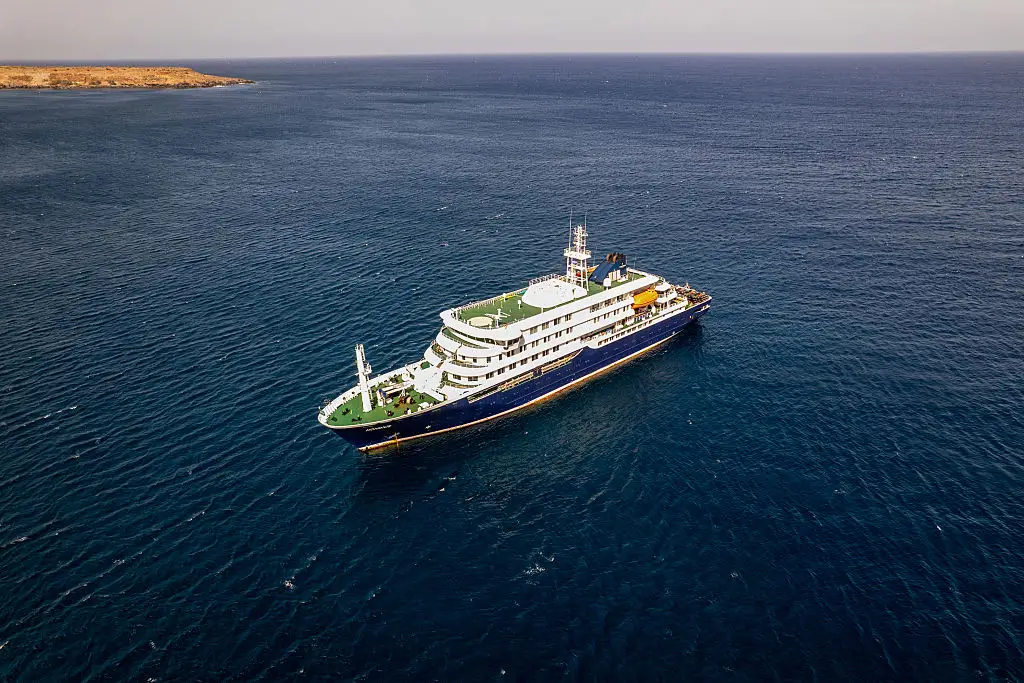
An update has been issued on the ongoing situation with the hantavirus-infected cruise ship, MV Hondius.
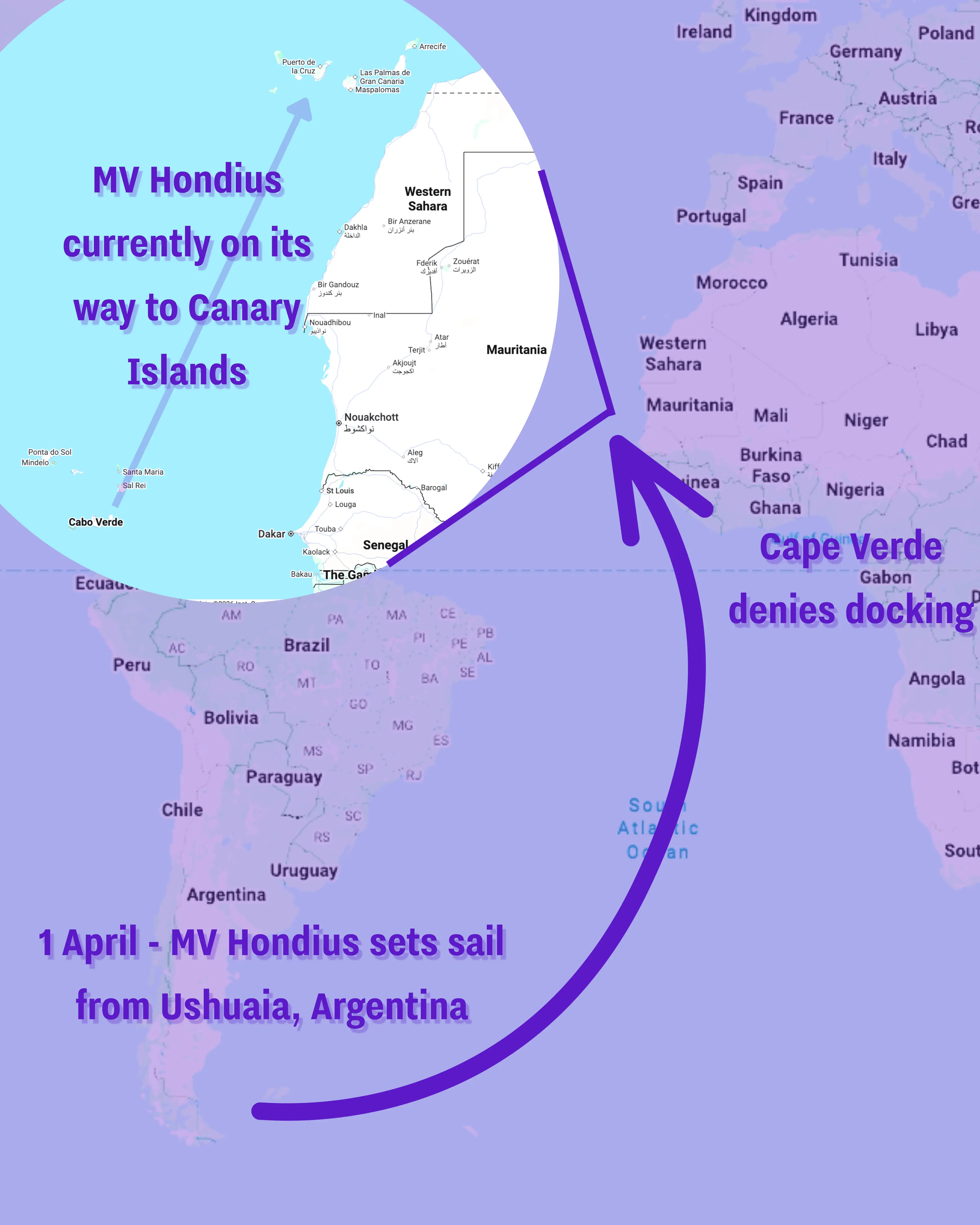
Three passengers have died after an outbreak of the virus on the Dutch ship, which set off from Argentina on 1 April on its way to Cape Verde.
A further three people - a Brit, a German, and a Dutchman - who are also suspected of having contracted the virus were medically evacuated from the vessel earlier this week and have been flown to the Netherlands to receive specialist medical care.
Two additional UK residents also left the boat, returned home, and have been placed into a 45-day self-isolation.
Advert
The cruise is currently on its way to Tenerife, where it's expected to arrive on Sunday (10 May) to dock off the coast, and small boats will transport those on board to land to get medically evaluated.
However, world health officials are also working to track down 30 people who left the MV Hondius before knowing they'd been exposed to hantavirus.
At the same time, UK authorities confirmed that another British national, who is currently under assessment on the island of Tristan de Cunha, had been diagnosed with suspected hantavirus.
Today (8 May) the Spanish newspaper El Pais reported that the country's health ministry has additionally identified a suspected case in Alicante.
As per Sky News, Spain's secretary of state for health Javier Padilla said that a woman may be infected, who was a passenger on the same plane as a patient who died in Johannesburg, South Africa, after travelling on the cruise ship and catching the virus.
The passenger in question, who died, left the ship when it stopped at St Helena on 24 April, and travelled to South Africa, where she tragically lost her life two days later.
It comes as Padilla, who has been updating the media on the situation, confirmed that Spanish Health Minister Mónica García did write that a person in Alicante has reported mild symptoms consistent with the virus and is being isolated while test samples are analysed.
She said: "We reiterate that the risk to the general population remains very low. Surveillance systems are functioning correctly, and we are in constant coordination with health authorities to respond to any potential risk situation."
It also comes after a Dutch flight attendant has also been hospitalised after she came into contact with a cruise ship passenger who later died of hantavirus.
Hantaviruses are a group of viruses carried by rodents that can cause severe disease in humans, as per the World Health Organization.
While most hantaviruses don't pass from person to person, there have been rare instances of human transmission with the Andes strain - the one identified on the ship.
Officials have reassured that the risk to the public is low, but Dr Tedros Adhanom Ghebreyesus, director-general of the WHO, said there could be more cases because of the incubation period of the Andes virus.
Experts believe the incubation period for the virus in the human body can extend to six weeks, but the WHO is not expecting the outbreak to be an epidemic.
1 April - The MV Hondius cruise ship departs Ushuaia, Argentina, going on to visit Antarctica, South Georgia, Nightingale Island, Tristan da Cunha, Saint Helena, and Ascension Island. Around 150 people are on board, of 23 different nationalities.
6 April - A 69-year-old Dutch man complains of a fever, headache, and mild diarrhoea while onboard.
11 April - The man’s condition deteriorates. He dies following respiratory distress.
12 April - The captain of the MV Hondius breaks the news of the man’s death to passengers. According to one of the passengers, the captain says the man died of natural causes and there is no contagion. Life continues as normal on board the ship.
24 April - The man’s wife, also 69 and from the Netherlands, goes ashore in St Helena, a remote island in the South Atlantic, experiencing gastrointestinal symptoms. On the same day, a British man presents to the ship’s doctor with shortness of breath and signs of pneumonia.
25 April - The Dutch woman boards an Airlink flight to Johannesburg, South Africa. Contact tracing efforts follow in the coming days to track down the 82 passengers and six crew members onboard the flight.
26 April - The 69-year-old Dutch woman dies after arriving at the emergency department in Johannesburg, South Africa. Meanwhile, the British man’s condition deteriorates.
27 April - The British man is medically evacuated from Ascension Island to South Africa. He remains in intensive care in Johannesburg. The MV Hondius initiates its SHIELD response health and safety plan.
28 April - A German passenger develops a fever.
2 May - The German passenger dies following pneumonia symptoms. Laboratory testing confirms the British man has hantavirus. The World Health Organisation is notified by the UK.
4 May - The Dutch woman is also confirmed to have had hantavirus. The ship’s operator, Oceanwide Expeditions, confirms that there are two crew members, one British and one Dutch, with acute respiratory symptoms who require urgent medical attention.
6 May - Swiss authorities confirm a case of hantavirus from a passenger of the MV Hondius who heard of the outbreak and presented himself at a hospital in Zurich. The two crew members, along with a close contact of the German passenger who died on 2 May, are medically evacuated from MV Hondius. Of these three passengers, two are now in stable condition in hospital, and one is asymptomatic in Germany. The MV Hondius heads North for the Canary Islands. Oceanwide Expeditions says no symptomatic individuals remain on the ship
8 May - The UK confirms a third British national has suspected hantavirus on the remote island of Tristan da Cunha.
10 May - The MV Hondius is scheduled to arrive at the port of Granadilla in Tenerife